
Setting Your Family Up for Success Abroad

When you’re raising children outside your home country, the “village” isn’t automatically there. There are no grandparents dropping by, and babysitters are hard to find. It’s a beautiful life which can also be isolating, so it is important to be intentional with supporting your family.
Building your foundation
A strong foundation sets everything up for success. It doesn’t remove the hard days, but it gives you something solid to stand on when you’re sleep‑deprived, second guessing yourself, and have many decisions to make, all while doing it in your less dominant language. To set up this foundation, it’s important you (as a couple) discuss your values, boundaries and fears.
Your top 3 values
These are your internal GPS. When everything feels chaotic, your values pull you back to what matters most. As someone living abroad, your values might include things like freedom, opportunity, adventure, stability, or connection.
Share your list with your partner and listen to theirs. The goal is not to match perfectly, but to get clear on what your shared priorities are for your family. When you both know what you stand for, decisions—schooling, travel, work, money, visitors, languages—become clearer, even when you’re exhausted. Your values become your compass.
Your boundaries
Boundaries shape how you live, what you say yes to, and what you protect. They are flexible guardrails, helping you feel safe and grounded in your choices.
Examples:
How much contact, visits or advice from extended family is okay for you?
What do you not want for your life abroad (e.g., constant relocation, to have to learn another language, living far from medical care)?
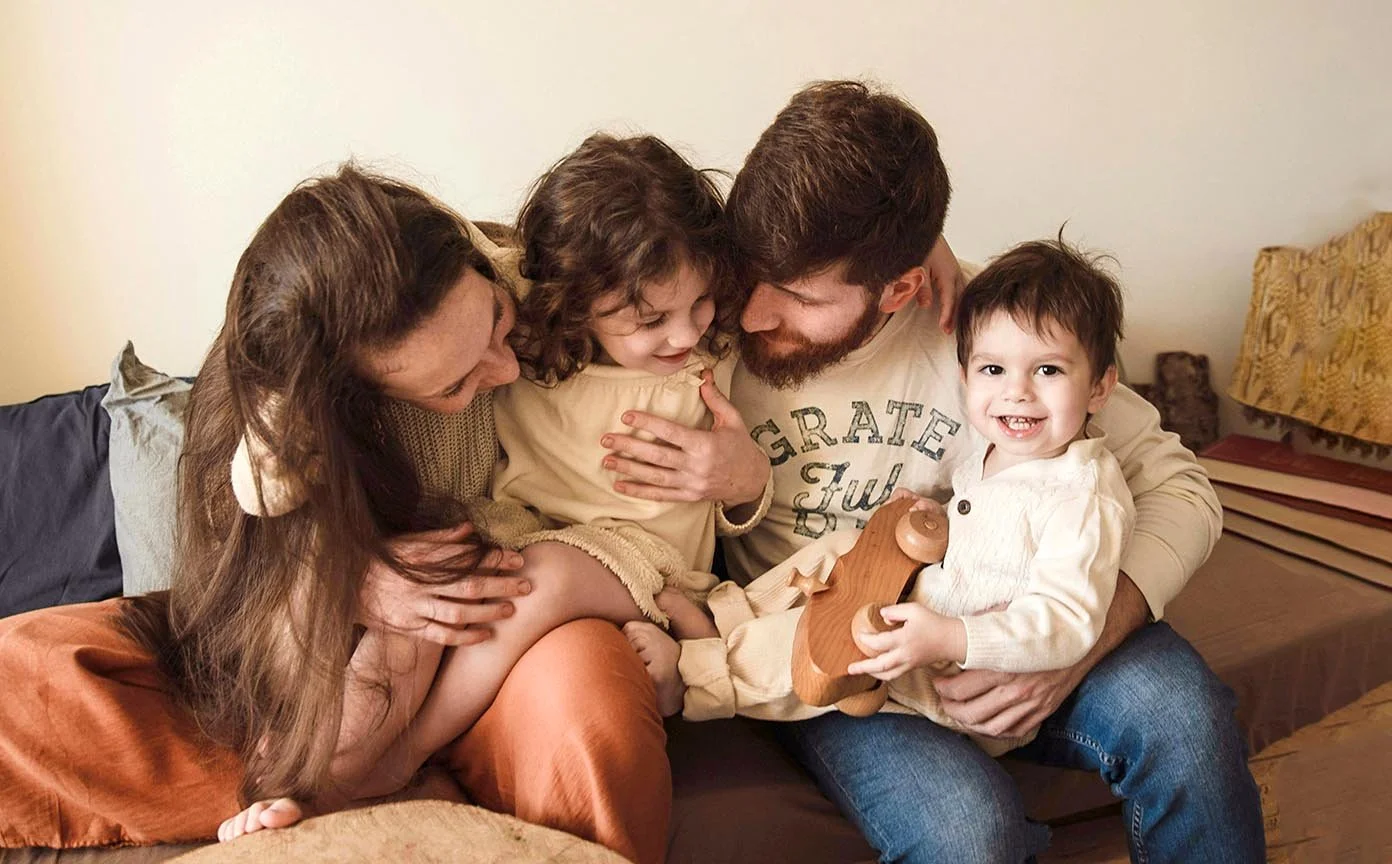
When you feel secure and respected, you feel more at ease, and your children can see and feel that safety through you.
Your fears
Many families abroad worry about:
Not having enough support
Struggling with their mental health
Doing it “wrong” without family nearby
Their relationship changing in ways that feel scary
When you say your fears out loud, it allows your partner (and others) the chance to say, “How can I support you in this?”
Remember: Answer these questions individually, and then share them with each other. Ask follow‑up questions. Stay curious, not defensive. Curiosity is the bridge to understanding your partner’s experience and for them to understand yours.
It’s important to remember that you and your partner are always changing, and you can revisit this activity. What was once true might shift in 6 months or at a crossroads with another international opportunity. Checking in with each other keeps you aligned instead of drifting apart.
Your Careers
Your career and identity matters and living abroad with kids changes everything.
As a couple, ask:
Will one career take the lead abroad?
Do you want to alternate whose career is prioritized over time?
Will you give equal weight to both careers—and if so, what support (childcare, flexible work, location) do you need to make that real?

This is not an easy conversation. It touches money, power, location, visas, and identity. Avoiding this conversation often leads to resentment and having it now gives you options and choice.
How do you want to parent?
Digging deep, ask each other:
What does being a parent mean to me?
What did parenting look like in my family growing up? What do I want to keep, and what do I want to change?
Two people from the same country won’t parent in the same way. So, if you’re from different cultures, that difference will be even more visible. It’s important to be curious here, and ask questions, so you can understand a lot about your partner’s triggers, expectations and hopes. You’ll also see where you align and where you may need even more curiosity.
Furthermore, sharing the parenting commitments:
How do we want to co-parent?
Does one of us want to be the “lead parent”?
Do we want to share that role or take turns?
This can feel confronting. It forces you to look at the models you grew up with and decide what to consciously repeat or rewrite. It’s vulnerable work that’s incredibly powerful.
Life abroad: independence versus interdependence
A lot of us were raised to equate independence with success. However, parenting abroad demands something different: interdependence. You’re not meant to carry this alone, and neither is your partner. Interdependence is when a couple is intentional with their lives, choices and commitments. It’s having tough conversations that might feel uncomfortable and unromantic, yet they open up a very beautiful part of a relationship: intimacy. Strong, healthy relationships are built on vulnerability and repair.
What’s best for us?
Everyone has an opinion on parenting: social media, cultures, governments, big business, your parents, your inlaws, even your local barista or bartender. In the end, only you (and your partner) knows what’s best for your family.
What works for us?
What do we need in this specific country, with our specific resources and challenges?
What feels true in my body, not just “right” on paper?
You’re allowed to say no and do things differently. Be honest with yourself. Be honest with your partner. This is how you build a solid foundation as a family abroad—one grounded in clarity, courage, curiosity and connection.
